


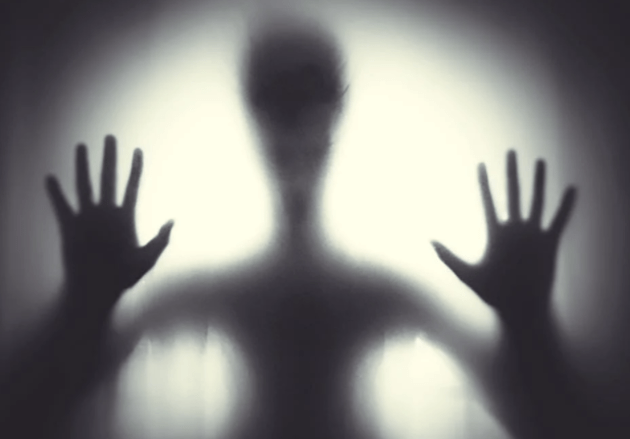
While the idea of ghosts sounds exciting, if ghosts existed, it would give physicists not a headache, but a massive migraine attack-here’s why.
For starters, how would ghosts be seen?. For something to be visible, photons must leave the object and end up in our eyes in some way. Photons are the smallest particles of electromagnetic energy, often called light particles. When the photons are emitted from an object or emitted from a light source and bounce off the object, the object can be perceived by our eyes. Suppose the photons “bounced off” the ghosts. That would only be possible if ghosts have some sort of energy and momentum, which ghosts aren’t supposed to have. What if they emitted light, like a lamp? That would still create problems. The energy needed to generate the light would have to come from somewhere.
This connects to the second problem, which is ghosts being a thermodynamic nuisance. Ghosts are often able to move things, make sounds, or slam doors. They also bring temperature anomalies with them, like cold spots. To move things or slam doors, they need kinetic energy (energy an object possesses due to motion). Making sounds requires acoustic energy (the mechanical energy produced by audible vibrations), and the cold spots require heat energy. According to the first law of thermodynamics, energy can not be created nor destroyed. All this energy has to come from somewhere, making the idea of ghosts completely impossible.
There are some possible explanations for what people might have explained as “ghosts”, though,all of which can be backed up by science. When carbon monoxide, an odorless, colorless, and tasteless gas builds up in their blood, the person can experience symptoms that may feel paranormal. The symptoms include headaches, nausea, dizziness, confusion, and hallucinations –all symptoms that someone could easily mistake for a ghostly presence. The most plausible explanation for a haunted house is actually carbon monoxide from gas appliances flooding the house. There have actually been cases of this. In 1921, a couple moved into a house and promptly began to suffer headaches, listlessness and strange auditory and visual hallucinations such as footsteps, mysterious figures, and strange sensations. The culprit was none other than a broken furnace vomiting carbon monoxide. Another case involved a woman who saw a “ghost” while taking a shower, which turned out to be an improperly installed gas water heater.
Another more common ghostly phenomenon that can be backed with science is sleep paralysis, a type of parasomnia. Sleep paralysis is associated with hallucination, a sense of pressure, and an inability to move or speak, a perfect condition for someone to mistake for a ghostly possession or paranormal activity. People often go through a feeling of fear, panic, or helplessness during this, which strengthens the idea of a ghost more than ever. In a case study, EB, a 22-year-old woman went through spells of sleep paralysis in which she had strange visual imagery and sensations, such as a feeling of a foreign presence in the room. This would be enough to make any person believe that they have seen a ghost-when the only thing they were seeing was a day full of fatigue and coffee due to the sleepless night.
By. Seojin Yun
Works Cited
https://www.sciencedirect.com/topics/computer-science/acoustic-energy
https://www.energy.gov/science/doe-explainsphotons
https://www.nbcnews.com/healthmain/see-ghosts-there-may-be-medical-reason-1C9926902
https://www.lung.org/blog/spooky-things-in-house
https://my.clevelandclinic.org/health/diseases/21974-sleep-paralysis