


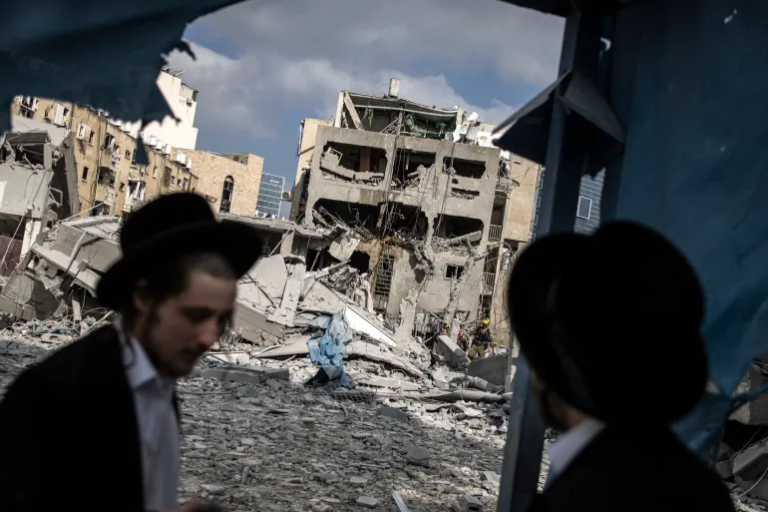
On the morning of February 28, 2026, the Middle East changed overnight. I remember I woke up to my instagram reels flooded with footage of missile strikes and for a moment, it was hard to tell if it was real or an AI. It was. The United States and Israel launched strikes on Iran. A month later, the region still burns with the conflict, ever more violent.
The hostility between the US and Iran didn’t start out of nowhere. Tensions date back to the Islamic Revolution of 1979. The revolution overthrew the US backed Shah and replaced Iran’s monarchy with one whose entire identity was anti-American. The new government made normal diplomacy nearly impossible from day one.
At the center of the conflict is Iran’s nuclear program. The main concern has been Iran’s pursuit of uranium enrichment that could be used to build a nuclear weapon. In 2015, a deal called the JCPOA froze Iran’s nuclear activities in exchange for the lifting of sanctions. However, in 2018, President Trump withdrew from the deal, and Iran began stockpiling enriched uranium.
For Israel, Iran is an existential problem as Iran has expanded its regional influence through groups like Hezbollah, Hamas, and the Houthis, organizations that share Iran’s hostility toward Israel and the United States, while continuing to advance its missile and nuclear capabilities.
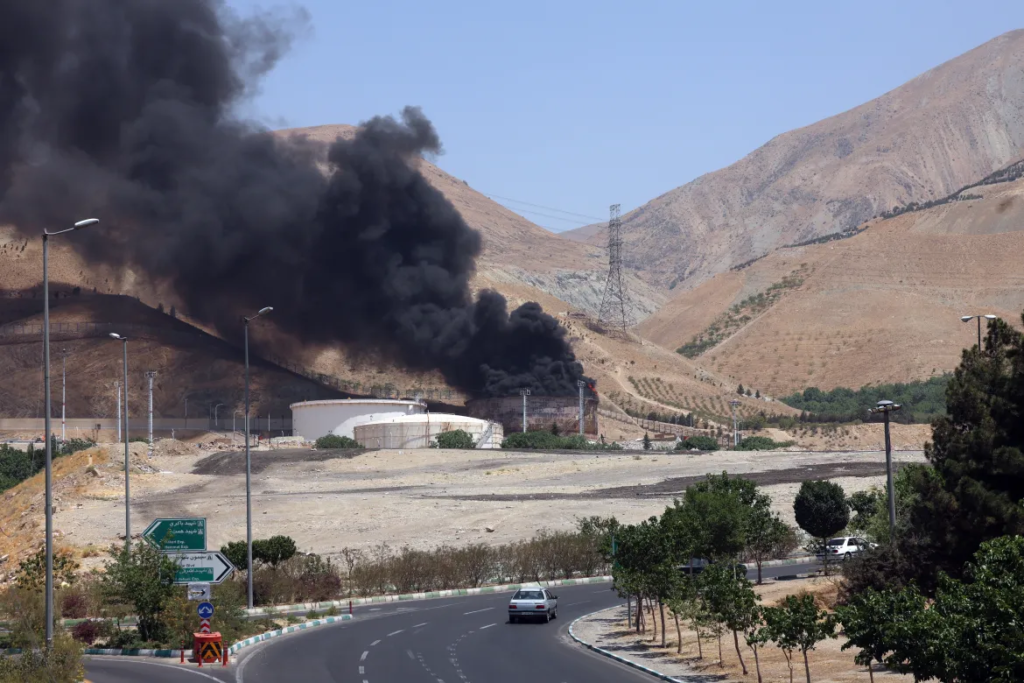
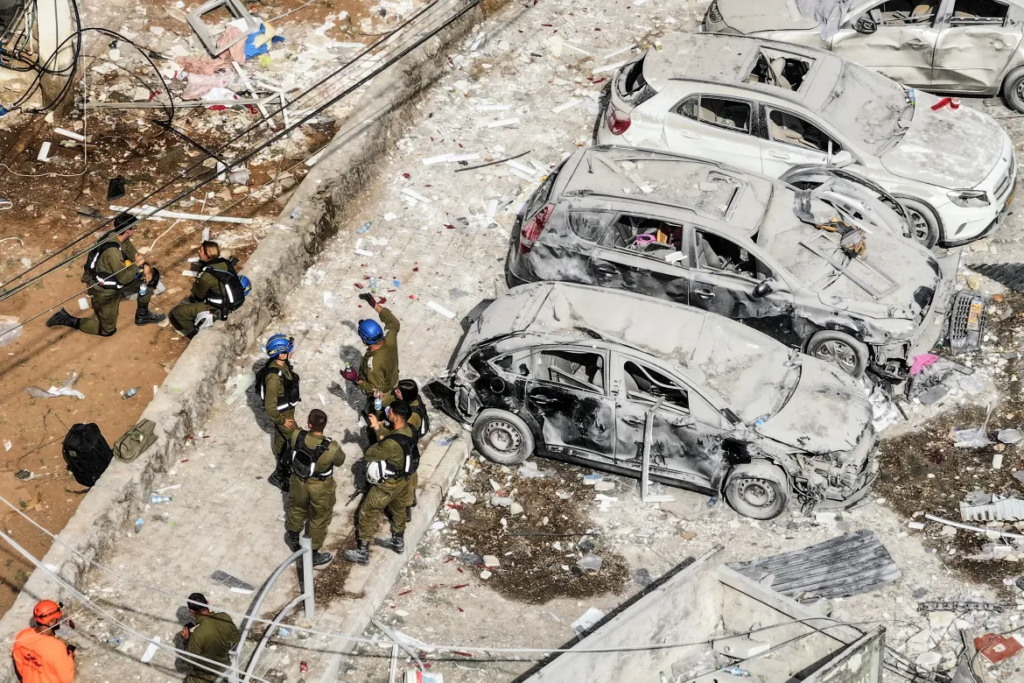
Today’s war started with Operation Epic Fury. In just the first 12 hours, US and Israeli forces conducted nearly 900 strikes targeting Iranian military establishments and senior leadership. The opening strikes killed Supreme Leader Ali Khamenei, along with several top Iranian government officials. Iran’s response was immediate, and they responded by launching missiles at Israel and US military bases across the region. Tehran, capital of Iran, moved quickly to block the Strait of Hormuz, a critical waterway for global oil trade.
The conflict has since spread far beyond Iran’s borders. Hezbollah entered the war from Lebanon. Iran launched missiles and drones not just at Israel but Bahrain, Kuwait, Qatar, the UAE, Jordan, Saudi Arabia, Syria, Iraq, Turkey, and even the British overseas territory of Akrotiri in Cyprus. In Kuwait, drone attacks shut down the Kuwait International Airport and another drone attack struck near the Fairmont Hotel on Palm Jumeirah, UAE.
The war’s consequences are being felt far beyond the Middle East. Global travel and trade have been severely disrupted, flights in and out of the Middle East halted, and shipping has been rerouted to avoid the blocked Strait of Hormuz.
Gas prices, too, have been affected. In the United States, the national average for unleaded gasoline hit $3.93 a gallon, up from $2.98 just two days before the war began. Diesel has climbed even faster, now sitting just under $5 a gallon, a dollar higher than last month. The root cause is the strait of Hormuz. About one-fifth of the world’s oil supply passes through that waterway and the effects have been felt immediately and tangibly across the globe.
The stock market, too, has been affected. On March 2, the first trading day after Operation Epic Fury, Northrop Grumman rose over 4%, Raytheon jumped nearly 5%, and Lockheed Martin climbed over 3%. The logic is that wars mean more weapons contracts.
Thirty days in, the conflict has developed into a full-scale regional war with no clear solution. The question now is not how the war started but how the war is going to end. Will diplomacy hold? Will the Strait reopen? Nobody has answers yet. With ongoing conflicts with thousands of different sources and news outlets saying their own things. The world is still scrambling to make sense of the conflict.
By. Daniel Song
Sources
https://www.britannica.com/event/Iranian-Revolution
https://www.cfr.org/backgrounders/what-iran-nuclear-deal
https://www.aljazeera.com/news/2018/5/8/donald-trump-declares-us-withdrawal-from-iran-nuclear-deal
https://www.centcom.mil/OPERATIONS-AND-EXERCISES/EPIC-FURY/
https://edition.cnn.com/2026/03/28/world/live-news/iran-war-us-israel-trump
https://edition.cnn.com/2026/03/08/business/soaring-diesel-prices-wider-impact