


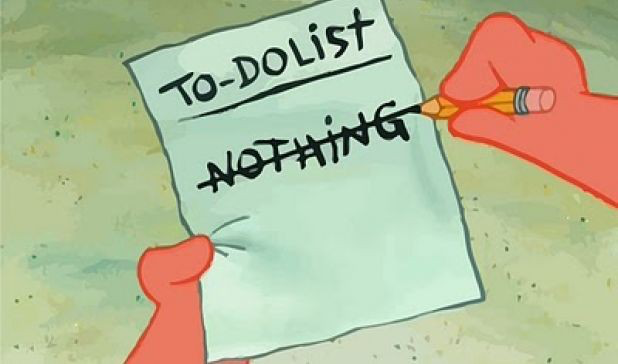
Think about the last time you did absolutely nothing. No phone, no music, no task to finish. If you are having trouble remembering, you are not alone — and that might be a problem. As life has gotten busier, people are always doing something. In a world that rewards being productive, we have started to forget one of the most important things a person can do: rest.
From a young age, people are taught that being busy means being successful. Schedules are packed with school, activities, and deadlines. However, research shows that this constant busyness comes at a cost — and that taking time to do nothing is not being lazy. It is actually something we all need.
Your Brain Needs a Break
When you stop focusing on a task, your brain does not just turn off. Scientists have found a part of the brain called the Default Mode Network (DMN), which becomes most active when we are not doing anything specific. This part of the brain helps with creativity, self-reflection, and processing our experiences.
According to Buckner, Andrews-Hanna, and Schacter, the default network is most active when people are not focused on the outside world, and it plays an important role in memory, imagination, and understanding ourselves (Annals of the New York Academy of Sciences 1). In other words, the time you spend staring out the window might be just as useful for your brain as the time you spend studying.
For example, think of it like working out. You would not exercise for twelve hours without stopping — rest is actually when your muscles grow. The brain works the same way. Therefore, resting is not wasting time. It is part of how the brain works best.
Boredom Is Not the Enemy
Most people try to get rid of boredom as fast as possible. The moment we feel it, we grab our phones. However, boredom might actually be one of the best things for creativity.
Psychologists Sandi Mann and Rebekah Cadman at the University of Central Lancashire did experiments where people who were bored first did better on creative tasks than those who were not. According to their findings, boring activities led to increased creativity, and daydreaming played an important role in connecting boredom to new ideas (Mann and Cadman, Creativity Research Journal 165).
Even some of the most creative people in history — Einstein, Darwin, and J.K. Rowling — have talked about how daydreaming helped their biggest ideas. Rowling came up with the idea for Harry Potter on a delayed train, with nothing to do but think. So next time you feel bored, try not to fill that time right away. Something good might be happening in your head.
Rest and Mental Health
Being constantly busy is connected to anxiety, burnout, and poor mental health — especially for young people. According to APA’s 2023 Stress in America survey, adults aged 18 to 34 reported an average stress level of 6 out of 10, the highest of any age group (American Psychological Association).
Doing nothing — like going for a quiet walk, lying down, or just sitting without a screen — gives your body and mind a chance to recover. This kind of rest lowers stress hormones, reduces anxiety, and improves mood. It is not a luxury. For many people, it is something they really need.
How to Actually Do Nothing
Ironically, doing nothing can actually be hard at first. However, there are some simple ways to start: Schedule unscheduled time. Set thirty minutes in your day with nothing planned. Try not to fill it. Leave your phone in another room. It is harder to find quiet than it used to be, but it is worth it. Go outside without headphones. Let your mind go wherever it wants. Lastly, notice what comes up in your head. The thoughts and feelings that appear during those quiet moments are often the most important ones.
Conclusion
In conclusion, doing nothing is important because it helps the brain work better, supports mental health, and gives space for new ideas. Even though many people worry that resting means falling behind, taking breaks can actually help you do better when you see it overall. Since rest is a natural part of how humans are built, we should start following it that way.
By. Heeseo Kim
Works Cited
American Psychological Association. “Gen Z Adults and Younger Millennials Are ‘Completely Overwhelmed’ by Stress.” American Psychological Association, 1 Nov. 2023, www.apa.org/topics/stress/generation-z-millennials-young-adults-worries.
Buckner, Randy L., Jessica R. Andrews-Hanna, and Daniel L. Schacter. “The Brain’s Default Network: Anatomy, Function, and Relevance to Disease.” Annals of the New York Academy of Sciences, vol. 1124, 2008, pp. 1–38.
Mann, Sandi, and Rebekah Cadman. “Does Being Bored Make Us More Creative?” Creativity Research Journal, vol. 26, no. 2, 2014, pp. 165–173.Petrone, Paul. “Why You Should Spend More Time Doing Nothing.” LinkedIn Learning Blog, www.linkedin.com/business/learning/blog/productivity-tips/why-you-should-spend-more-time-doing-nothing.