


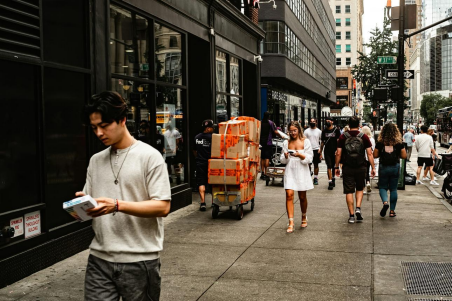
Imagine coming home after a long day and realizing that you have nothing to eat. Instead of cooking, you open a delivery app, choose your favorite meal, and wait for it to arrive. Within minutes, dinner is at your door. Similarly, when you need something, you can order it online and have it delivered the next day. These services have made our lives easier than ever. However, while convenience saves us time and effort, it often comes with costs that we rarely notice.
Why Do We Value Convenience So Much?
Convenience has become an important part of modern life. People are constantly looking for ways to complete tasks faster and with less effort. From online shopping to food delivery, businesses have developed services that make everyday activities easier.
One reason we prefer convenience is our desire for immediate satisfaction. Instead of waiting or spending time completing a task, we often choose the fastest available option. This behavior is connected to instant gratification, which refers to the desire to receive rewards immediately rather than waiting for them. Businesses understand this behavior and use it to attract customers. Features such as one-click purchases, same-day delivery, and personalized recommendations make shopping easier and faster. As a result, consumers may purchase things more frequently without thinking carefully about whether they actually need them.
The Environmental Cost We Rarely See
Although convenience provides many benefits, it can also create environmental problems.
For example, ordering food often involves disposable containers, plastic bags, and utensils that are thrown away after a single use. Similarly, online shopping requires packaging materials and transportation to deliver products.According to the Organisation for Economic Co-operation and Development (OECD), packaging accounted for approximately 40% of global plastic waste in 2019 (Global Plastics Outlook). This shows how materials designed to protect products and make transportation easier can contribute to a much larger environmental problem.
The United Nations Environment Programme (UNEP) also reported that global municipal solid waste could increase from approximately 2.1 billion tonnes in 2020 to 3.8 billion tonnes by 2050 if current trends continue (Global Waste Management Outlook 2024). These statistics do not mean that convenience alone causes environmental damage. However, they demonstrate how modern consumption patterns can create consequences beyond what consumers immediately see.
Is Convenience Always Worth It?
It would be unrealistic to argue that people should completely give up convenience. Delivery services can help busy families, online shopping can improve access to products, and modern technology can save valuable time. The problem is not convenience itself, but how easily we become dependent on it. When something becomes effortless, we may stop considering the resources required to make it possible. For example, ordering a single inexpensive item for next-day delivery may seem harmless. However, making similar decisions repeatedly can increase packaging waste and transportation demands. The true cost of a purchase is not always reflected in its price. Businesses also have a responsibility to address these problems. Reducing unnecessary packaging, improving delivery efficiency, and offering reusable alternatives can make convenience more sustainable without removing its benefits.
Rethinking Our Everyday Choices
Convenience is not necessarily a bad thing. In many ways, it represents progress and innovation. However, the ability to do something quickly does not always mean it is the best choice. Small decisions, such as combining online orders, avoiding unnecessary purchases, or choosing reusable products can help reduce waste. More importantly, these habits encourage us to become more aware of our consumption. Ultimately, the hidden cost of convenience reminds us that every easy choice has a process behind it. We may only see the finished product or the package arriving at our door, but its impact can extend far beyond that moment. Perhaps the question we should ask is not simply how much time convenience saves us, but what we are willing to overlook in exchange for it.
By. Heeseo Kim
Works Cited
Global Plastics Outlook: Economic Drivers, Environmental Impacts and Policy Options. OECD Publishing, 2022.
Global Waste Management Outlook 2024: Beyond an Age of Waste – Turning Rubbish into a Resource. United Nations Environment Programme and International Solid Waste Association, 2024.