


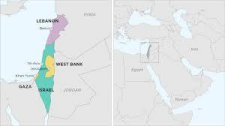
The modern history of Israel and the surrounding Middle East is shaped by the collapse of empires, European imperialism, nationalism, and prolonged regional conflict. From the late nineteenth century to the present, competing political, religious, and territorial claims have transformed the region into one of the most contested areas in the world. Understanding Israel’s modern history requires examining both Jewish and Arab nationalism, the legacy of colonial rule, and the broader geopolitical struggles of the Middle East.
Israel was established in 1948 following decades of Jewish immigration to Palestine and increasing international support for a Jewish homeland. In the late nineteenth and early twentieth centuries, many Jews, influenced by Zionism and fleeing antisemitism in Europe, moved to Palestine, which at the time was under Ottoman and later British control.
After World War I, Britain governed Palestine under a League of Nations mandate. Britain had promised support for a Jewish homeland in the 1917 Balfour Declaration, while also implying support for Arab independence, creating conflicting expectations. Tensions between Jewish and Arab communities escalated as Jewish immigration increased.
After the Holocaust, global support for Jewish statehood grew. In 1947, the United Nations proposed a plan to divide Palestine into separate Jewish and Arab states. Jewish leaders accepted the plan, but Arab leaders rejected it. When Britain withdrew in May 1948, Jewish leaders declared the independence of the State of Israel.
Immediately, neighboring Arab states invaded, leading to the 1948 Arab–Israeli War. Israel survived and expanded its territory beyond the UN plan. Jordan took control of the West Bank, Egypt controlled Gaza, and hundreds of thousands of Palestinians were displaced, creating a long-term refugee crisis. Israel focused on state-building while facing hostility from neighboring Arab states. Border clashes and Palestinian refugee issues fueled instability. Israel developed a strong military to ensure its survival in a hostile regional environment.
In 1967, tensions rose, leading to the six-day war that Israel fought against Egypt, Jordan, and Syria. Israel captured the West Bank, Gaza Strip, East Jerusalem, the Golan Heights, and the Sinai Peninsula. This territorial acquisition significantly changed the conflict, putting millions of Palestinians under Israeli occupation, and land became a key issue in future peace negotiations.
Israel returned the Sinai Peninsula to Egypt after the 1979 Egyptian-Israeli peace treaty, showing that peace was possible through negotiations. However, the conflict with the Palestinians continued. The first intifada (1987-1993) was a widespread Palestinian uprising against Israeli rule in occupied territories.
The Oslo Accords (1993) created limited Palestinian autonomy through the Palestinian Authority and raised hopes for a two-state solution. However, major issues such as borders, refugees, settlements, and Jerusalem were still unresolved.
The failure of peace talks led to the Second Intifada (2000–2005), marked by suicide bombings and harsh Israeli military responses. Israel later withdrew its settlers and troops from Gaza in 2005, but maintained control over Gaza’s borders.
In 2007, Hamas took control of Gaza after winning Palestinian elections. Since then, Israel and Hamas have fought multiple wars, while Gaza has faced severe economic and humanitarian challenges.
Today, Israel remains in conflict primarily with Palestinian groups in Gaza and the West Bank. Israeli settlement expansion in the West Bank continues to fuel tensions and international criticism. Periodic violence, military operations, and rocket attacks persist. Israel also faces regional threats, particularly from Iran and Iranian-backed groups such as Hezbollah in Lebanon. Meanwhile, Israel has normalized relations with several Arab states through recent diplomatic agreements, reshaping regional alliances but not resolving the Palestinian issue.
By. Jungwoo Choe
References
Amt, A. (n.d.). The Middle East Conflict. German Federal Foreign Office. https://www.auswaertiges-amt.de/en/aussenpolitik/regionaleschwerpunkte/nahermittlereros ten/middleeastconflict-228366
Israel-Palestine Conflict: Israel-palestine conflict: Today’s latest from Al Jazeera. Al Jazeera. (n.d.). https://www.aljazeera.com/tag/israel-palestine-conflict/
Timeline: Key events in the israel-arab and Israeli-palestinian conflict. AJC. (2025b, November 17). https://www.ajc.org/IsraelConflictTimeline
Works Cited
American Dental Association (USA), Brushing Your Teeth: When and How
NHS (UK), Dental Care and Tooth Brushing Advice
Mayo Clinic (USA), Hand-Washing: Do’s and Don’ts
Harvard Health Publishing (USA), Breakfast and Cognitive Performance
National Institutes of Health (USA), Gut Microbiome and Mental Health
Centers for Disease Control and Prevention (USA), Caffeine and Energy Drinks