


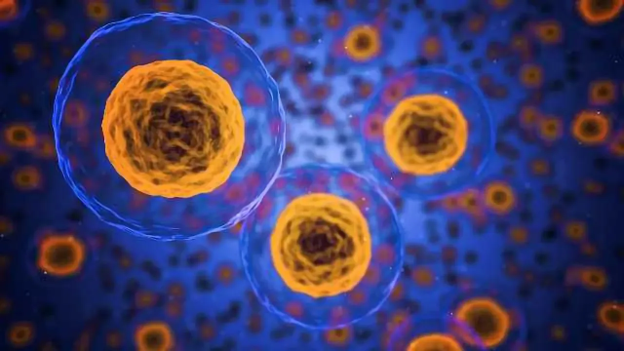
Scientists have officially entered the DIY life era, and now they are making their own cells. They are anticipating that studying synthetic cells will reveal more about how life forms, how diseases develop, and push forward the development of different kinds of fuels, pharmaceuticals, and materials.
There are two strategies scientists use when creating the artificial cells: top down and bottom up.Top-down is basically minimalism, except for cells. It involves taking an actual living cell and stripping the cell of the unnecessary molecules until just before it becomes a dead cell. This approach gives scientists a sense of what is absolutely needed for a cell to be an actual cell.
The bottom up approach is basically the opposite-take some non-living materials and start smushing them together until it exhibits behaviors of a living cell such as dividing and passing information on to the offspring. So how are these synthetic cells actually made?
The Biochemistry Method
In 2023, some researchers used enzymes to build bubble-like structures, called vesicles, that could make their own proteins. They packed these structures with plasmids, which are small pieces of DNA that carry instructions. The vesicles could read these instructions and produce proteins. Because this process depends on enzymes, proteins, and DNA, it relies heavily on biochemistry.
Making Cells Through Polymerization
But recently, scientists have found a new way to produce these artificial cells-except this time, they decided to skip biochemistry. Instead, they chose to make cells with the polymerization of monomers. By merging monomers called HPMA (2-hydroxypropyl methacrylate) into polymers, they made some self-assembling cell-like vesicles, which have membranes with hydrophobic and hydrophilic sides, similar to a real cell membrane. When the formation process of these vesicles creates enough internal pressure, it pops out a daughter vesicle- almost like it’s reproducing.
So, Why Should We Even Care? Synthetic Cells have many practical applications.
In medicine, they can precisely deliver drugs to the targeted tissues, which can minimize side effects. “Cell factories” can also be created for biofuel production. These cells can efficiently convert biomass or waste into fuel and develop sustainable energy sources.
The whole process itself could also provide a better insight into the origins of life.
By. Seojin Yun
Works Cited
https://biologyinsights.com/synthetic-cell-creation-uses-and-future
https://chemrxiv.org/engage/chemrxiv/article-details/644ef3c60d87b493e38fd261